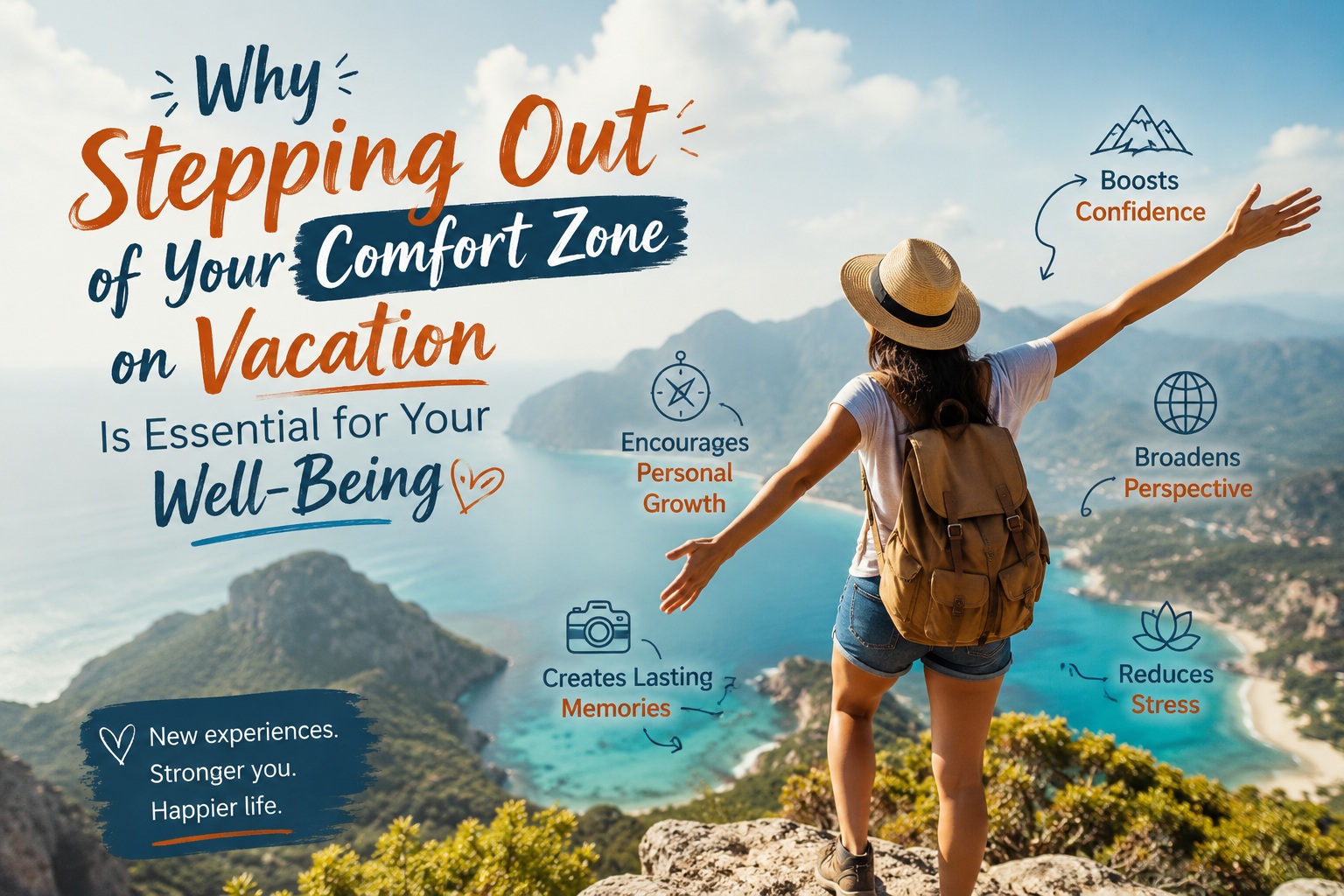
Most people book a vacation to escape. But the question is, escape into what? Another electronic device, a comfortable recliner, a week of idleness? Inaction may be necessary, but if you're truly exhausted, being inactive won't help.
The Problem With "Fly and Flop" Travel
There is a kind of vacation that seems perfect. A fancy hotel, sunny afternoons by the pool, no agenda. For a few days, it does the trick. You unwind. But it's not quite enough, and people don't realize how flat the experience was until they're back at work a few Mondays later, stressed to the gills, and note that they feel exactly the same as they did pre-vacation.
Research published in the _Journal of Happiness Studies_ used psychometric tests to verify this, revealing that the mental health benefits of a vacation, a phenomenon called the "vacation glow," dissolve swiftly - typically within a week of returning to work. Those who took passive, low-sensory trips had the quickest rate of decline. Those who had novel, exciting, active experiences saw the glow persist longer.
What Novelty Actually Does To Your Nervous System
When you put yourself in an unfamiliar environment and try something new, you're operating off neuroplasticity - the brain's ability to create new neural connections. This is what's happening when you learn a new language, learn a new skill, or learn to do something that makes your heartbeat increase a little. The brain has to rearrange itself. That rearranging is the reset people are truly after on holiday.
There's also something called eustress - positive stress that is healthy for your nervous system. Not the grinding, deadline-driven kind, the kind that comes from trying something difficult and real. Hooking a big fish in a big water, and feeling the physical resistance, and interpreting the behavior of an animal you can't see - these are sensory, high-focus tasks that force you to live in the present. That feeling of mindful presence is the same feeling that people pay therapists and meditation apps to achieve.
And as a cognitive bonus, you have the "awe" effect. Standing on a boat in the open ocean, with the horizon in any direction, changes your stress reaction chemically. Cortisol goes down. The nervous system reboots. Your daily problems lose their addictive attraction, seen from those distances.
Comfort Zone Expansion Doesn't Require Extreme Sports
This is where many people get stuck: they think that having an adventure means going bungee jumping or on a wilderness expedition on your own. But that's not the case. Expanding your comfort zone involves taking risks, albeit calculated ones. Growth occurs in the space between what is familiar and what is manageable but difficult.
And that's exactly where professionally guided trips come in. If you've never fished offshore before, booking a day on
Los Suenos fishing charters puts you in the hands of experts - you don't need any experience, but you will face a real challenge. You are not on your own. You are working at the very limit of your current abilities with support, and that is exactly the type of environment that fosters self-efficacy.
Self-efficacy is not confidence in general, it is a belief based on experience that you can handle something new. Master a new physical challenge in a different environment, and that belief will spill over. You will notice it in how you tackle decisions at work, how you deal with unexpected challenges, and how much confidence you have in your own judgement.
The Active Recovery Argument
Active recovery is a concept from sports training - you don't rest by doing nothing, you rest by doing something different. Low to moderate effort, new movement patterns, fresh stimulation. The principle holds outside athletics too.
A week of passive vacation isn't recovery. It's suspension. You stop the grind but you don't rebuild anything. An adventure-led trip does the opposite - it engages different parts of your cognition, puts your body in new physical situations, and forces your attention outward rather than inward. You come back with something new in your system, not just a gap where the stress used to be.
The dopamine pathways involved in novelty and accomplishment are the same ones that get suppressed during prolonged burnout. Reactivating them through genuine challenge - especially in a natural environment - is one of the more direct routes back to feeling like yourself.
Start Where The Water Meets The Horizon
The vacation you want to take isn't necessarily pricier, more arduous, or more untamed than your usual. It's just more determined. One guided morning offshore. One new-to-you activity. One absorbed moment. And that's it. Not escape. Engagement. Your brain will thank you for it